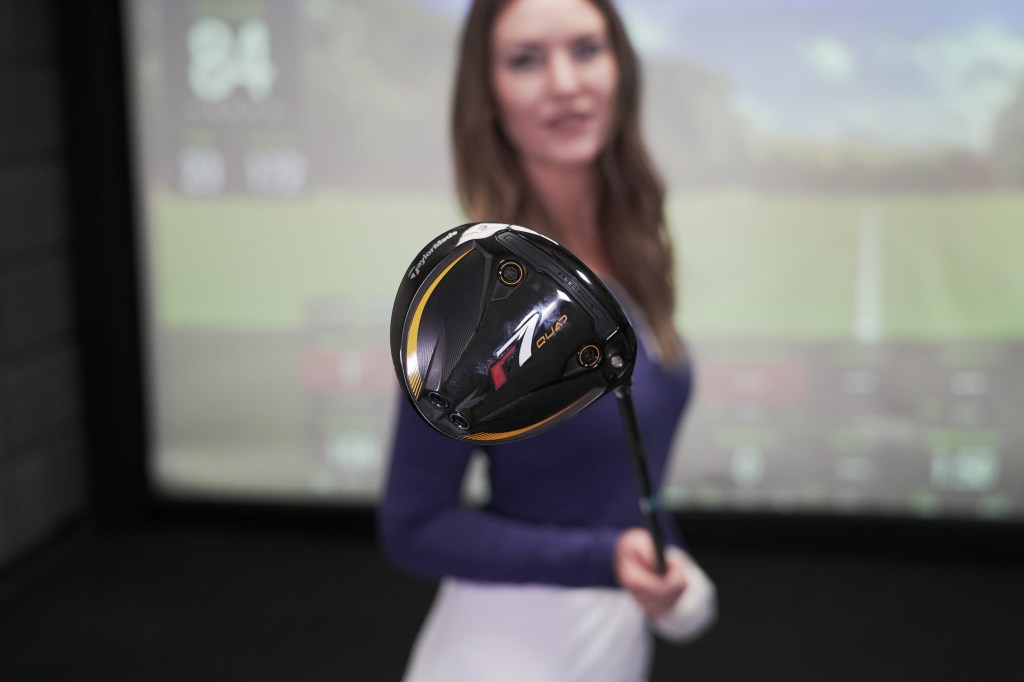
Curious about the mini driver? It’s been gaining popularity among pros, but does it live up to the hype for everyday golfers? In this article, I’m putting it to the test to see if this compact club could make a big impact on your game.
We’ve seen pros like Tommy Fleetwood (Taylormade BRNR Mini), Akshay Bhatia (Callaway Elyte Mini), Keegan Bradley (Taylormade BRNR Mini), Adam Scott (Taylormade BRNR Mini Copper), and Sergio Garcia (Taylormade BRNR Mini) swapping out their standard drivers for mini drivers in tournament play. If the pros are turning to mini drivers, you might be wondering, should we be doing the same? Well, I couldn’t resist testing them out for myself. To gain firsthand insight into the performance of mini drivers, I underwent a fitting at GOLFTEC to compare how I hit the Callaway Elyte Mini Driver versus the Callaway Elyte Standard Driver. I’ll show you all my cards – or, well, my numbers – as we take a magnifying glass to the mini driver and see what it’s really all about.
WHAT IS THE MINI DRIVER:
Before diving into my fitting experience, let’s take a step back and break down the mini driver. After all, club engineers don’t just release clubs without good reason, and this is no exception.
If you’ve ever struggled to hit the ball off the tee with your driver, you’re not alone. It’s a common issue for many golfers, whether you’re just starting out or have been playing for years. Enter the mini driver. Think of it as the cool, slightly more compact cousin of your driver. These clubs have been making quite the splash lately, and they’re designed to give you the best of both worlds: distance and control.
The first major brand to introduce the mini driver was Taylormade. Following suit were Titleist, PXG, and Callaway, and since then, it’s been all about testing the limits of what these clubs can do.
2025 MINI DRIVER MODELS
- TaylorMade R7 Mini Driver
- Description: A modern take on a classic design, featuring a 305cc clubhead, 4-way adjustable weighting, and an infinity carbon crown. Skratch Golf+1Golf+1
- Callaway Elyte Mini Driver
- Description: A compact version of the Elyte driver, offering a 340cc clubhead, three-way adjustable weight, and a 10X AI face. MyGolfSpy
- Titleist GT280 Mini Driver
- Description: A 280cc clubhead designed for versatility, featuring Titleist’s SureFit hosel adapter and front and back weights for customizable ball flight. Skratch Golf+1Nine by Nine Golf+1
- PXG Secret Weapon Mini Driver
- Description: A 300cc clubhead with 4-way adjustable sole weighting and an adjustable hosel, designed for fine-tuning ball flight and spin.
THE SPECS
Alright, here’s the secret sauce: mini drivers are a perfect blend of a driver and a fairway wood. They feature a clubhead that’s slightly smaller than a standard driver (around 265cc to 305cc), and the shaft is typically a little shorter, around 44 inches. These design changes help with accuracy and consistency, all while still providing a decent amount of distance.
Why does this matter? Well, club engineers made these adjustments so that golfers can still get the power they need off the tee, but with a little more control. Think of it as a smart combo of distance and accuracy. For players who struggle with their full-size drivers, this can be a game-changer.
THE BENEFITS
Enhanced Accuracy and Control
Let’s talk about accuracy, because that’s one of the key reasons you’ll want to try a mini driver. With its smaller clubhead and shorter shaft, the mini driver is just easier to manage. That means more consistent contact, straighter shots, and fewer errant drives into the trees. If you’re playing a tight course or facing tricky holes, a mini driver could be your new best friend. It gives you control without giving up that much distance.
Versatility: From Tee to Fairway
Mini drivers also give you the best of both worlds when it comes to versatility. They’re great for tee shots, but you can also use them off the deck (aka, off the ground). If you’ve ever struggled with your 3-wood or find yourself needing a little more distance on a long par 5, a mini driver could be just what you need. It’s the perfect option for when you want to hit the ball farther, but don’t quite have the confidence in your 3-wood (or your driver off the ground).
MY MINI DRIVER EXPERIENCE
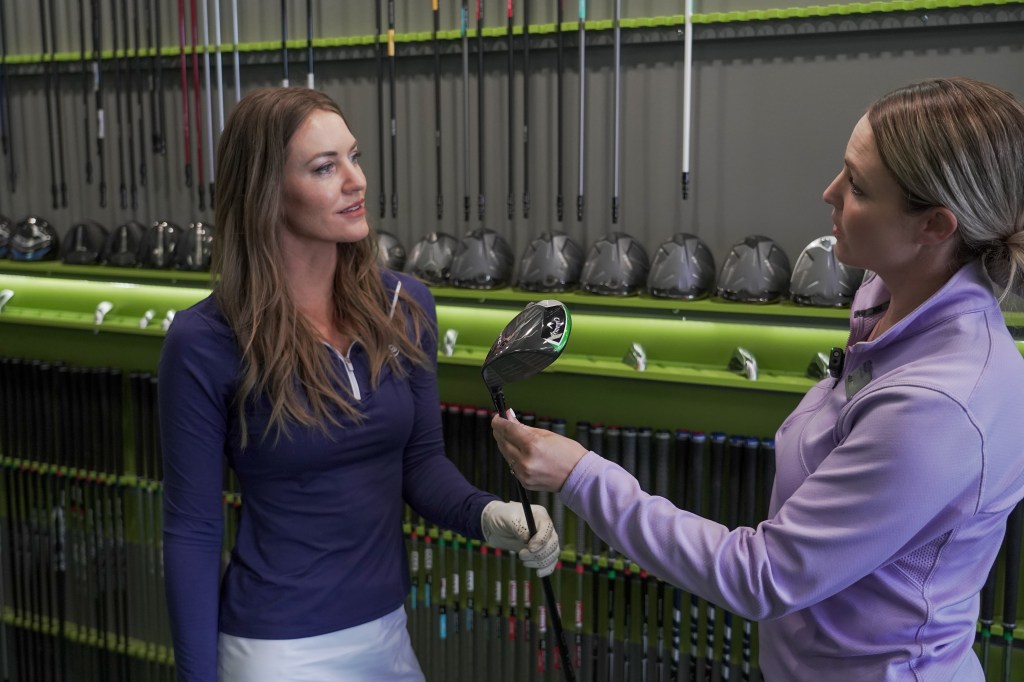
To truly understand how the mini driver performs, I visited GOLFTEC and worked with Chelsea Carroll, one of their expert coaches. We tested three setups: hitting the mini driver off the deck (off the ground), the mini driver off the tee, and my regular driver off the tee.
I wanted to see if the mini driver could offer more control, particularly through a lower dispersion rate (meaning shots would land closer together) while still maintaining a solid distance. Testing it off the deck would show how it performs in real-world conditions, like from the fairway, while the driver comparison would reveal how much distance it might sacrifice for accuracy.
Here’s what we found after hitting five shots with each setup:
CALLAWAY ELYTE MINI- OFF THE DECK
Club: Callaway Elyte Mini Loft: 13.5 degrees
Shaft: Vanquish 5 R Ball Speed: 126
Launch: 9.47
Offline: 11.3
Distance: 204.7 yds
Mini Driver off the Deck: The mini driver off the deck produced a ball speed of 126 mph and a distance of 204.7 yards with a moderate launch angle and backspin.
CALLAWAY ELYTE MINI- OFF A TEE
Club: Callaway Elyte Mini Loft: 13.5 degrees
Shaft: Vanquish 5 R Ball Speed: 129
Launch: 13.13
Offline: 17.7
Distance: 222.7 yds
Off the tee, the mini driver achieved a ball speed of 129 mph and a distance of 222.7 yards, with a higher launch angle and consistent shot dispersion.
CALLAWAY ELYTE DRIVER- OFF A TEE
Club: Callaway Elyte (standard head)
Loft: 9 degrees
Shaft: Vanquish 5 R Ball Speed: 130
Launch: 13.26
Offline: 22.5
Distance: 240 yds
The standard driver reached 240 yards with a ball speed of 130 mph but had a wider shot dispersion (22.5 yards offline) and lower backspin.
The mini driver off the tee gave me a solid 222.7 yards, but the standard driver still went farther at 240 yards. What stood out was the mini driver’s accuracy — my shots were more consistent and landed closer together. However, hitting off the ground with the mini driver didn’t feel as natural, and I struggled to find the same confidence I have with a fairway wood. This feeling would most likely go away with more time spent using the mini driver if I choose to sport the club in my bag.
HOW IT FEELS TO HIT
When looking down at the club, the mini driver looks more like a driver than a fairway wood. Visually, that felt strange to be hitting it off the ground. While the mini driver is meant to be easier to hit than a 3-wood, it took me a minute to adjust to the club. However, it was definitely easier to hit off the deck than the driver. The smaller size made it more forgiving off both the deck and the tee when compared to the driver, and I found that I was able to make more consistent contact.
IS THE MINI DRIVER FOR YOU?
f you’re looking for a club that gives you the confidence to hit accurate shots with a bit more distance, the mini driver could definitely be worth considering. The numbers don’t lie: it’s a solid club for more control and consistency, especially if you’re struggling with your full-size driver.
But remember, just like any club, the mini driver isn’t for everyone. It’s important to get properly fitted to find the right club for your swing and playing style. Many golf retailers and fitting centers offer fitting sessions that can help you make an informed decision.
At the end of the day, the right equipment can make all the difference in your game, so whether you’re curious about adding a mini driver or just exploring your options, be sure to test it out and see how it feels for you. Who knows? You might just find that the mini driver is the game-changer you’ve been looking for!
THE BIG PICTURE ON THE MINI DRIVER
The mini driver features a smaller clubhead and shorter shaft, which can provide more control and accuracy. It’s a versatile option for those looking for consistency off the tee and fairway, though it may not offer the same distance as a standard driver. It’s important for each golfer to get fitted to determine if this club suits their game.
 MS. SWAG GOLF